A spell for family harmony has one rule that matters more than any ingredient: it cannot take a side. The moment a family working favours one person, it becomes another argument. The working I use, the Round Loaf, is built so that nobody can be favoured. Every member of the family receives a share, every share is cut from one bread, and at the end every share goes back into the whole.
Where the Round Loaf comes from
In Greece and across the Balkans, families cut a round cake at the new year called the vasilopita. It is sliced in a fixed order, one piece for each person by name, and the very first slice is set aside for the house itself. In Anatolia the manners of the table carry the same idea: bread is shared, never thrown away, and whoever breaks it with you is bound to you by it.
What I love about this custom is that no speech is needed. You do not have to explain to a brother why he should talk to his sister. The bread explains it. You both came out of the same round.
How the working is laid
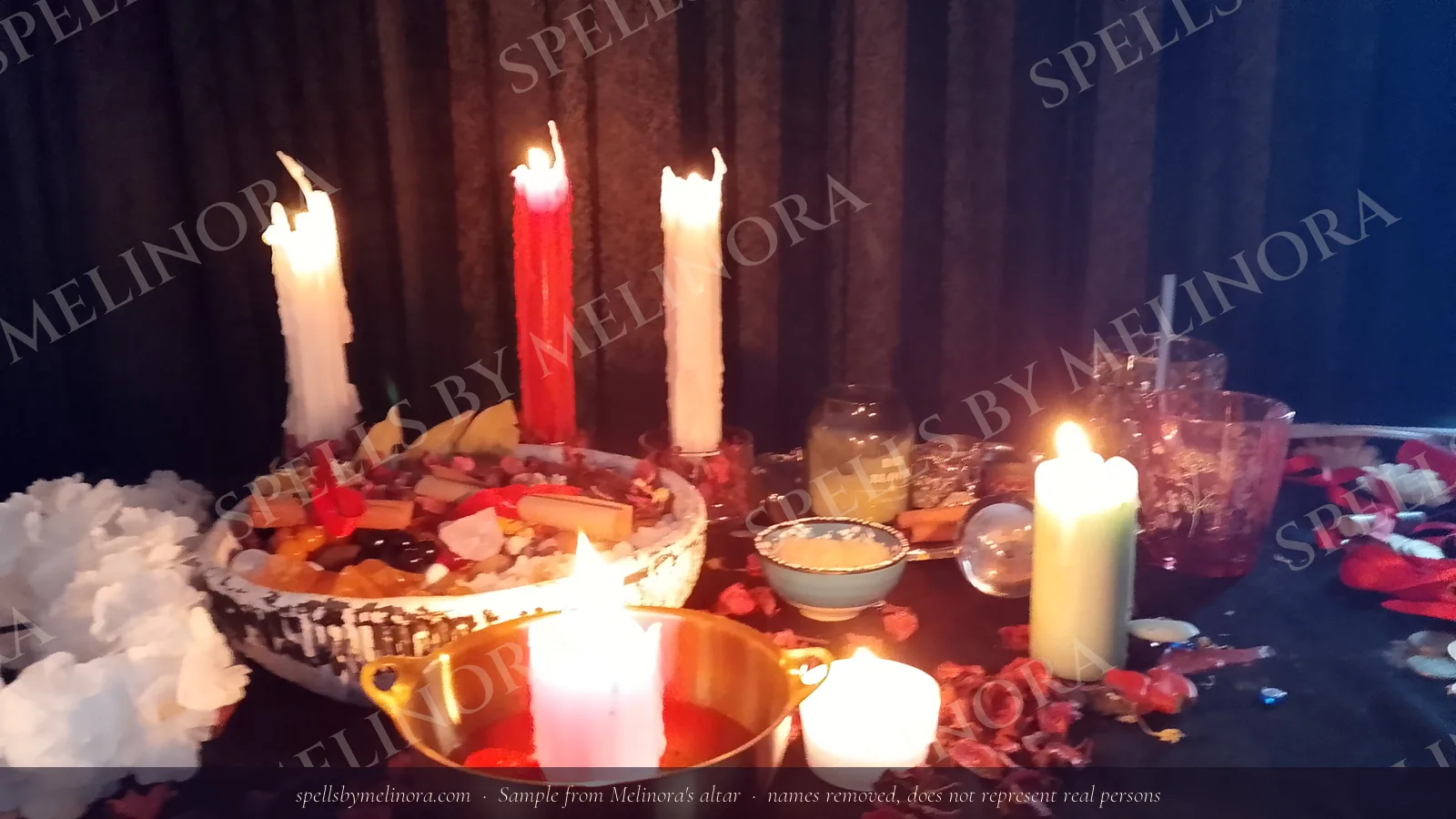
The table is set on my sweetening plate, which is kept for workings that soften what has gone hard between people.
- A round loaf. Village bread, a sweet bun or a flat round pide. The loaf stands for the family as one whole.
- Small papers, one for each member of the family, each carrying a single name.
- A white candle at the centre, like the middle of a family table.
- A clean white cloth, large enough to wrap the whole loaf.
The order of the cutting
The first slice always goes to the house. Before any person is named, the home they share is honoured.
Then one slice is cut for each member of the family, and their name is said aloud as the knife goes through. Some families are cut from eldest to youngest. For others I begin with the person who is most hurt, because they have been waiting longest to be counted. Each slice is laid on its own name paper, and then the candle is lit.
Back into one round
This is the heart of it. Once every slice rests on its name, the slices are lifted and fitted back together, side by side, into the round they were cut from. The loaf is whole again, but now every piece of it has been named.
The whole round is wrapped in the white cloth and left overnight. That is the seal: each share still belongs to the same whole. In the morning the bread is taken to the table and eaten. It is never wasted, because wasting it would undo the very thing it stands for.
What this working will and will not do
It does not decide who was right. It does not make anyone confess, apologise or change their mind on command. What it does is remind every person in that family, quietly, that they belong to something larger than the quarrel. People soften when they feel counted rather than judged.
Children in the family are included only as members of it. Their name goes on a slice like everyone else's, and the working is never about them in particular. And if your family's trouble involves custody, an inheritance or a divorce, keep your solicitor close; the loaf walks beside those matters, never in their place.
When two people are at the heart of it
It is worth saying that the loaf does not need everyone to agree to it, or even to know about it. The names are enough. Many of the families I work for are scattered across different cities, and the bread gathers them anyway.
Sometimes a family rift is really one hurt between two people, and the rest of the family is simply caught in it. In that case the Forgiveness Spell can clear the way from your side first, and the loaf can follow. If the whole house feels tense rather than any one relationship, the Home Blessing Spell works on the rooms themselves.
Signs the family is softening
- Two people who have not spoken in a long while greet each other.
- An invitation is accepted that would have been refused a month ago.
- More of you sit at the same table.
- An argument starts and ends in laughter instead of a slammed door.
After the working I send you a written record: the bread used, the order of the names, what I felt at each slice, and the morning the loaf was carried to the table.
Frequently asked questions
Is there a spell for family harmony?
Yes. The Round Loaf is an old table custom: a round bread is cut one slice per family member by name, the first slice going to the house, and then the slices are fitted back into one whole and wrapped overnight.
What is the vasilopita tradition?
Vasilopita is a round cake cut at the new year in Greece and the Balkans. It is sliced in a fixed order, one piece per person, with the first piece set aside for the house.
Can a spell stop family arguments?
A family working does not force anyone to agree. It reminds each person that they belong to the same whole, which often softens the ground so that arguments lose their heat.
Does a family peace spell take sides?
It should never take sides. In the Round Loaf every member receives an equal slice from the same bread and every slice returns to the whole, so no one is favoured or blamed.
Family Peace Spell
The Round Loaf: a slice for each name, laid on its own paper, then fitted back into one round and wrapped whole overnight.